How to Correctly Format an Academic CV
By zobsi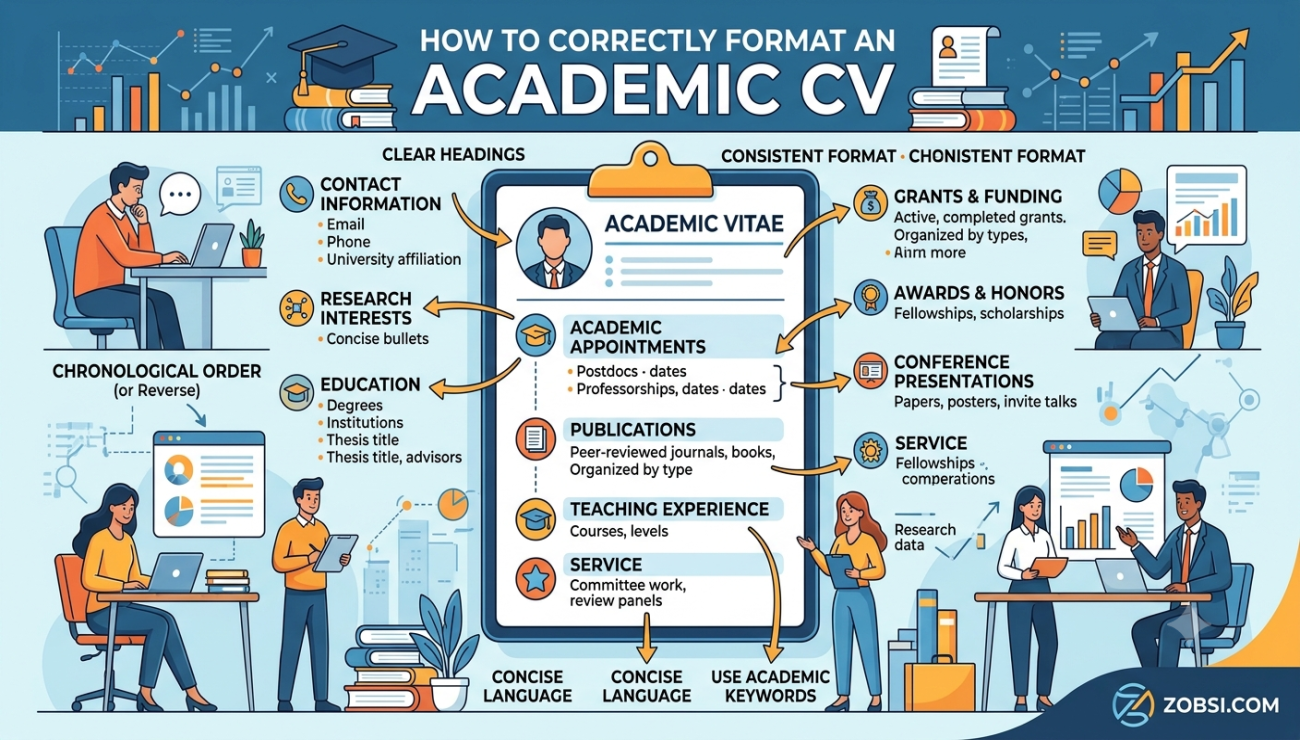
-
 By zobsi
 - 06, juil. 2026
 By zobsi
How to Correctly Format an Academic CV
An academic CV is different from a regular resume. It is more detailed and focuses on your academic achievements, research, and publications. Proper formatting helps present your information clearly and professionally.
1. Start with Personal Information
Include your full name, email address, phone number, and location.
Tip: Keep it simple and professional.
2. Add a Professional Summary
Write a short summary of your academic background and career goals.
Tip: Keep it concise and relevant.
3. List Your Education
Mention your degrees in reverse chronological order.
Include university name, degree, and year.
Tip: Highlight strong academic achievements.
4. Include Research Experience
Add details of research projects, thesis, or academic work.
Tip: Mention your role and outcomes clearly.
5. Add Publications
List any published papers, journals, or articles.
Tip: Use a consistent citation format.
6. Teaching Experience
Include teaching roles, assistantships, or workshops.
Tip: Mention subjects and responsibilities.
7. Skills Section
List relevant academic and technical skills.
Tip: Focus on skills useful for your field.
8. Awards and Achievements
Mention scholarships, grants, or honors.
Tip: Include only important achievements.
9. Conferences and Workshops
Add seminars, conferences, or training programs attended.
Tip: Highlight active participation.
10. References
Provide references or write “Available on request”.
Tip: Choose academic or professional contacts.
Conclusion
A well-formatted academic CV improves your chances of selection. Keep it clear, structured, and updated.
Visit:
https://zobsi.com/
https://zobsi.com/browsejobs
Recent Blog
Testimonials
I really appreciate how clean and user-friendly Zobsi.com is. The job recommendations are accurate, and the application process is smooth.

Natasha
DesignerZobsi.com made my job search incredibly easy. The platform is simple to use, and I found relevant job listings quickly. Within a short time, I was able to connect with recruiters and land interviews.
John
WriterPerfect for Freshers and Experienced Professionals Whether you are a fresher or experienced, Zobsi.com has something for everyone.

Steave
Php DeveloperWhat I liked most about Zobsi.com is the quality of job postings. The listings are genuine and well-organized. It gave me confidence

Sameer
AI EngineerZobsi.com is one of the best job portals I’ve used. It connects job seekers with the right opportunities efficiently. The experience was smooth from start to finish

Mike
Telecom
Connect top talent with leading employers effortlessly. Streamline hiring, post jobs, manage projects, and grow your career. Powered by innovation, built for success.

Comments (0)