Top Body Language Mistakes to Avoid on Zoom Interviews
 zobsi
zobsi
06 Jul
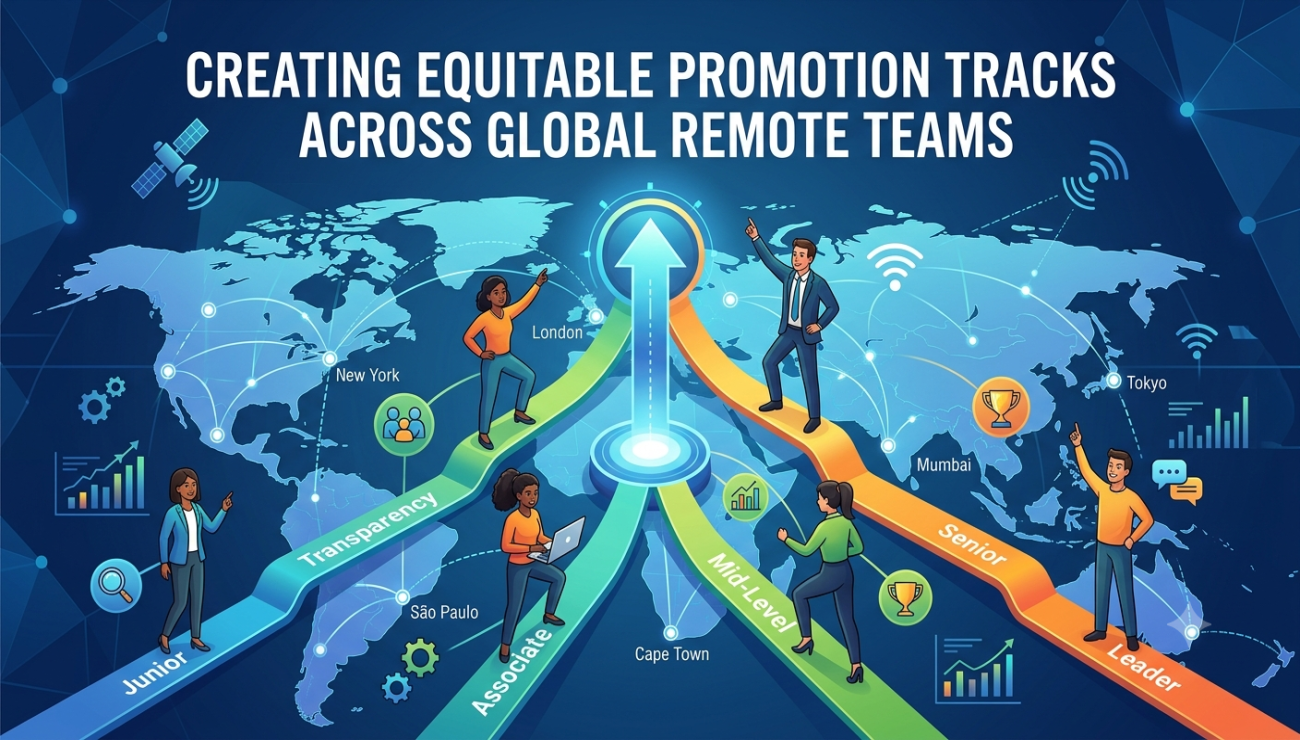

Managing a global remote team brings incredible talent diversity to a company. However, it also creates a unique challenge: ensuring that career growth and promotion opportunities are fair, transparent, and equal for everyone—regardless of their time zone or location.
Without intentional frameworks, remote companies risk falling into "out of sight, out of mind" proximity bias, where employees closer to leadership or primary office hubs get promoted faster.
To eliminate bias, career progression must be based on objective criteria rather than visibility. Create clear role competency matrices that define what is expected at each level:
When expectations are documented, performance reviews stay focused on output rather than hours spent logged into Slack.
Global teams span multiple time zones. If promotions depend heavily on real-time meeting presence or late-night calls, employees in distant time zones will always be at a disadvantage.
Evaluate contributions through asynchronous channels—such as project management deliverables, written proposals, and code or content quality. This levels the playing field for team members working outside headquarters' core hours.
"Equitable promotions aren't about who speaks loudest on Zoom; they are about measurable impact and consistent delivery."
Avoid relying on a single manager's opinion for remote promotions. Establish a quarterly or bi-annual calibration review where department managers come together to discuss candidates against standardized benchmarks.
This cross-functional review ensures that promotion standards remain consistent across different regional pods and departments.
Career growth depends heavily on having access to high-impact projects. Make sure project assignments are distributed intentionally rather than defaulted to the team members who live in the manager's local timezone or chat channel.
Building an equitable promotion track in a global remote environment takes deliberate effort. By standardizing career frameworks, focusing on asynchronous impact, and actively mitigating proximity bias, companies can retain top global talent and build a truly merit-based culture.
 zobsi
zobsi



Comments (0)